
A literal translation into Portuguese of the post made by BMC.
With the new business demands, more moving parts than before, and the need for fast delivery without sacrificing quality and safety, the old ways of managing and using technology only go so far.
A new approach is needed—a real-time, intuitive, automated, secure, open approach that will most likely rely on multi-cloud services to enable it. Traditional companies must evolve practices and processes through digital transformation to remain competitive.
So, what exactly is digital transformation? And how can the modern company achieve it?
We have compiled a comprehensive guide on digital transformation to help you understand what it is, why it is crucial, and how organizations can successfully transition to it. This guide will cover:
- Digital transformation
- 3 domains of DX
- DX Strategy
- Best practices of DX
- And more
Vamos começar !
What is Digital Transformation?
Sometimes abbreviated as DX, digital transformation is the integration of digital technology into all areas of business.
Although this may seem quite simple, digital transformation is much more than a direct integration of the best and latest technology in the workplace. Instead, it is a complete shift in culture and mindset in the way an organization operates and adds value to customers.
Digital transformation describes the dramatic ways in which companies are changing and adapting to respond to the demands of the era – a time in which we face major changes in how technology is created, managed, analyzed, and consumed.
The digitalization of business is a paradigm shift that occurs alongside the era of 'more', more people using more technology in more places, on more devices, for longer periods of time.
This may be easier for younger companies born during the technological era. But for organizations that have long-standing business processes or that simply never needed to rely on technology, this change is significant and intimidating.
IT professionals are witnessing the impact of digital transformation from a unique perspective: they are seeing it up close and personally.
The proliferation of technology means that there is more complexity to manage, and the high role of technology in companies means that the impact and outcome of IT services have never been so visible or valued. For example:
- Mobile devices and their applications feed new expectations from employees, who want self-service and on-demand options to work.
- Cloud computing has redesigned traditional boundaries with new models of acquisition, implementation, support, and management.
- The infrastructure and business machinery, which are not traditionally considered IT, are becoming more innovative, network-enabled, and part of an ever-expanding Internet of Things (IoT).
As a result, IT priorities are shifting, and it is necessary to find a balance between new methods and traditional approaches to manage the enormous scale of the digital transformation challenge.
Digital transformation is no longer an option. Going through DX is becoming necessary, especially after the global pandemic, which expanded businesses as we know them. In fact, according to the 2020 Pandemic Business Impact Survey, conducted by the data research giant IDG, The dependence on digital technologies for businesses has never been so crucial.
With so many people depending on technology for work, school, and to stay connected with their families, this important strategic initiative is proving to be a priority for organizations that have not yet started their own transformation.
Domains of Digital Transformation
If the comprehensive nature of digital transformation seems a bit overwhelming, we don't blame you. Fortunately, we can break digital transformation down into three main areas:
- Transform business processes and culture
- Transform internal IT systems
- Transform the consumer-oriented digital access
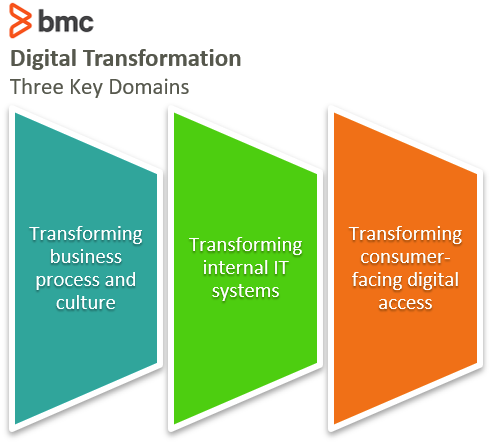
When we look at DX through these three areas, it can start to seem more tangible.
Create a Digital Transformation Strategy
IT is fundamental to the success of an effective digital transformation program. With so much dependence on technology for the future success of the business, IT finds itself in the difficult position of having to stand out in all dimensions.
The innovative services that provide the company with a competitive advantage must also be solid, economical, and secure. They must be easy to audit, provide business insights, and continuously improve to achieve business objectives.
For many, this introduces a tension between the need to transform the business through innovation and the less glamorous work of keeping the lights on and having an effective operational platform. It is necessary to establish a foundation for digital transformation that allows IT to manage the current and future complexities that digital transformation presents.
Good Practices of Digital Transformation
So, you are convinced that it is time to change. But where does one start?
These will be different for each sector and company, with some general guidelines existing when analyzing best practices for adopting digital transformation:
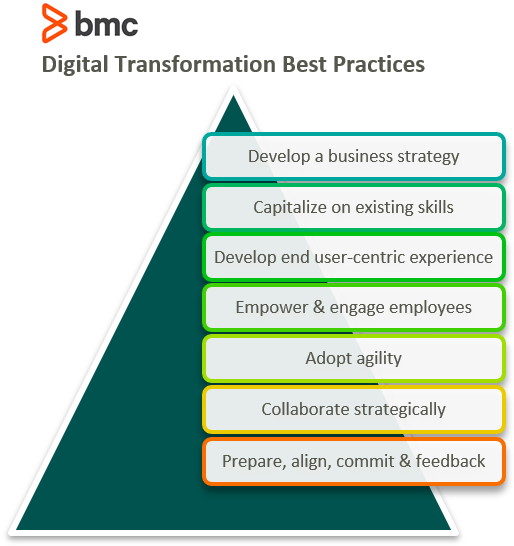
Create the Right Business Strategy
The first step is to establish concrete and realistic objectives for the overall digital strategy. Start by understanding the current state of digital maturity of your organization and outline where you want to go.
Use a Digital Transformation Framework
The structure of digital transformation It is a tool that guides all departments and levels of work throughout the journey. When executed correctly, it helps to:
- ensure that no area of the company is left unsupervised during periods of change.
- Keep all parts aligned with the overall business vision.
Successful structures enable business strategy while providing roadmaps that allow an organization to evolve and succeed in rapidly changing market conditions. These structures do this by providing a way to:
- Create tangible benchmarks, meaningful metrics, and clear indications of progress
- Identify the areas that require more attention or that can be used for greater growth.
Use the Current Skills and Team Members
Hiring external consultants can be an efficient option for some organizations, but it runs the risk of obtaining crucial buy-in from internal employees.
For many organizations, leveraging current employees is beneficial: they are the people who are already aware of the unique business challenges of your company. (Your current employees are the same people who perfectly understand which areas need immediate changes.)
(Consider the appointment of transformation director.)
Understand the Wishes and Needs of the End User
Certainly, digital transformation will greatly affect your company. However, your overall success depends on the end users. Do they agree with these changes? Are they adopting the technology and services as it transforms?
It is important to understand the desires and needs of customers. What are their specific challenges? What solutions do they prefer? What channels do they use?
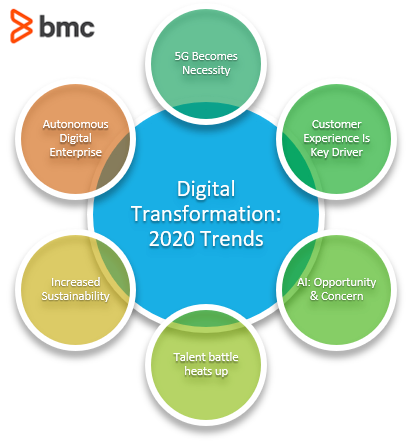
(Also consider the tdigital transformation trends for ideas.)
Design an Engaging Experience for Employeess
The next step is to focus on creating an initiative that engages and empowers team members.
By establishing strong governance controls, by providing solutions that can help facilitate manual tasks, and by offering improvements that are specifically sought, employees are more likely not only to adhere to the new transformation but also to thrive.
Collaborate strategically
Many companies have successfully achieved digital transformation, and many trusted consultants have experience in this area. To make a more effective transition, leverage these partnerships, reaching technology providers and other partners in similar business markets and vertical sectors.
Of course, deserved knowledge is also available in the media: from white papers and blogs like this one to our collection of essential books on digital transformation.
Evaluate and realign
As the transformation begins, set aside enough time to listen to employees and customers about what is working and what is not. Things may need to change to keep up with the market and, depending on the specific business, there may be better ways to approach tasks.
Be open to making changes according to specific indicators and performance metrics. See any transformation as a continuous process of ongoing improvement.
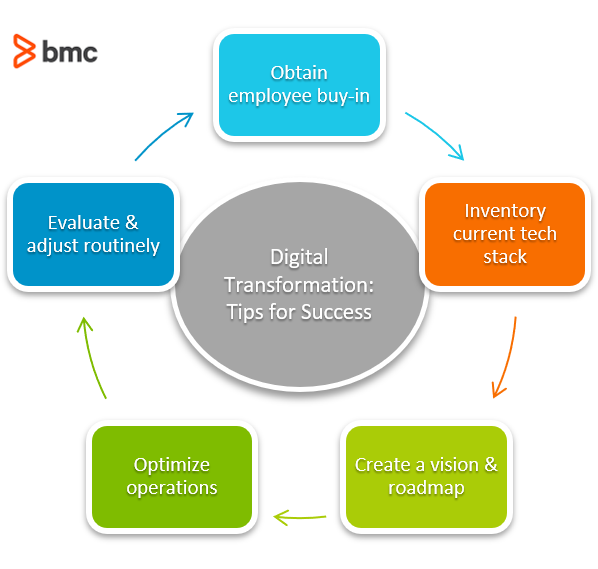
Digital transformation for the modern company
The successful digital transformation is within our reach. The adoption of digital transformation can be continuous and successful, following best practices and relying on the skills and knowledge of the current team members.